
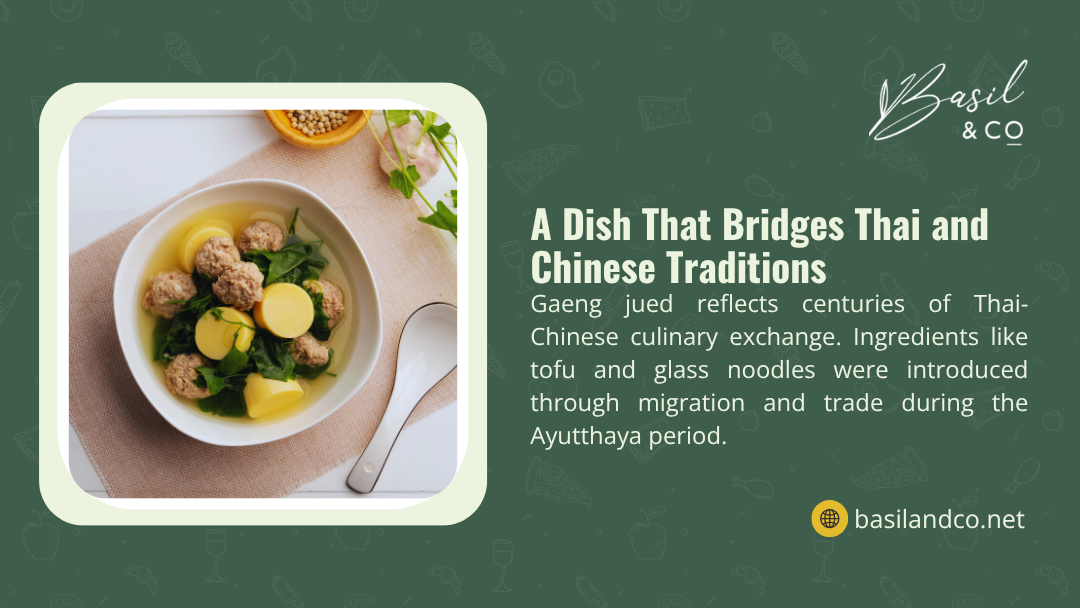
Gaeng jued, Thailand’s clear soup, sits on more home tables than tom yum or green curry on weeknights. The appeal is simple: a light broth with ground chicken, firm tofu, and glass noodles, seasoned with soy sauce and fish sauce, then rounded by napa cabbage or bok choy.
The dish traces to Central Thailand and echoes court cuisine ideals of balance and restraint, later shaped by Chinese influence through noodles and tofu. Families prize it as a “get-well soup” for its easy digestion and gentle aromatics from coriander roots and green onions.
In this guide, you’ll see the full gaeng jued recipe, the origin story, the health upside, and precise steps that produce a clear, flavorful broth every time, plus smart variations such as jued woon sen and a vegetarian bowl.
The Soul of Gaeng Jued: Clarity Over Chaos
Few Thai dishes reflect balance and restraint as gracefully as gaeng jued, the name itself translating to “mild curry” or “clear soup.” In Thai, “gaeng” refers to any soup or curry, while “jued” means bland, neutral, or gentle, a word that, in the Thai culinary sense, signals subtlety rather than lack of flavor. It’s a dish built on quiet harmony rather than intensity.
A Glimpse Into Its Origins
Gaeng jued has deep roots in Central Thailand, dating back to the Ayutthaya period (1350–1767), when royal Thai cuisine began blending local herbs with Chinese cooking influences. Court chefs, tasked with balancing complex, spicy feasts, created gaeng jued as a palate cleanser, served between heavier curries and stir-fries.
As trade with China flourished, the soup evolved. Immigrants introduced glass noodles made from mung bean starch, firm tofu, and lighter broths enriched with soy sauce. Over time, gaeng jued became the go-to family meal, simple, nourishing, and gentle enough for all ages.
By the early Rattanakosin era, the dish had traveled from palace kitchens to village tables. Housewives simmered ground chicken or pork, napa cabbage, bok choy, and tofu in fragrant broths flavored with coriander roots, garlic, and fish sauce. Unlike fiery soups such as tom yum, gaeng jued became the antidote, a soothing, restorative bowl that offered balance to Thailand’s spice-heavy cuisine.
Why It’s Known as “Gaeng Jued”
In Thai philosophy, food reflects the human condition. Just as emotions must be tempered, flavors must be balanced. The word “jued” (จืด) captures this concept, mild, understated, yet essential. Gaeng jued represents purity, calm, and healing, a moment of peace in a cuisine famous for intensity. It’s often called the “soup of serenity” in Thai households.
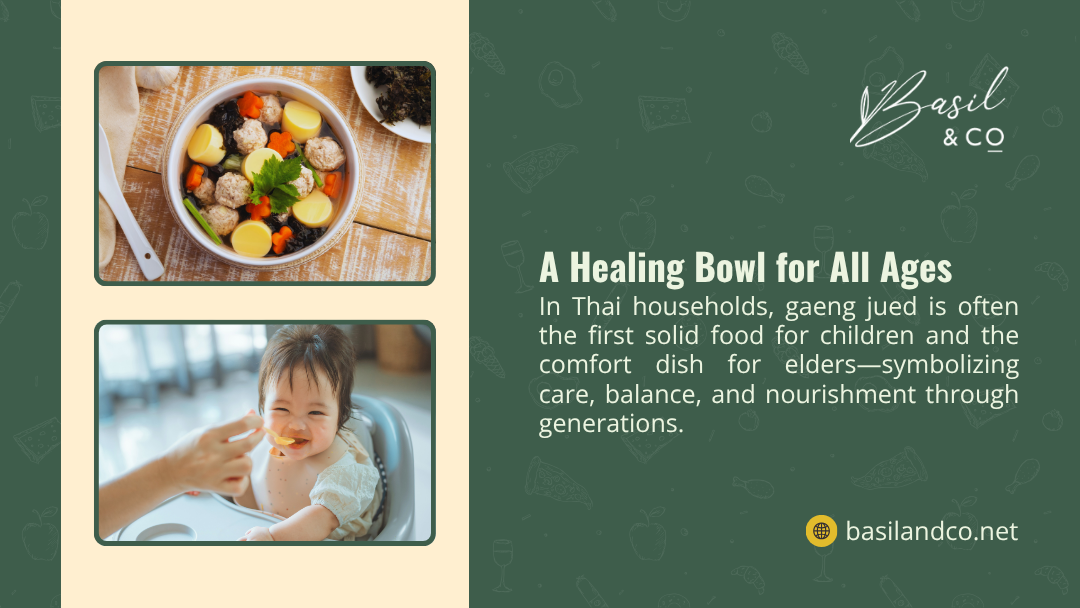
Because of this mild character, the dish holds symbolic importance. It’s served to the elderly, the sick, and young children, people who need nourishment without the burn of chili or heavy oils. It also often appears in Buddhist temples, where monks favor simple, non-spicy foods aligned with the principles of moderation and mindfulness.
The Health Within the Mildness
Don’t mistake mildness for blandness; gaeng jued is rich in nutritional and therapeutic benefits.
- Coriander roots and garlic contain antibacterial properties and help regulate blood pressure.
- Fish sauce and soy sauce supply amino acids and minerals that aid cellular repair.
- Mung bean glass noodles provide easy-to-digest carbohydrates that stabilize energy.
- Tofu offers plant protein and calcium, supporting muscle and bone health.
- Napa cabbage and bok choy contribute fiber, vitamin C, and folate for gut and immune wellness.
Together, these ingredients create a broth that detoxifies, hydrates, and heals, making it a Thai household staple after feasts or during recovery. Where tom yum energizes, gaeng jued restores.
A Legacy of Comfort and Calm
Today, gaeng jued remains Thailand’s quiet culinary hero. Whether served in homes, temple canteens, or modern restaurants like Basil & Co, its essence endures: clarity, simplicity, and nourishment. It’s the dish you turn to when you crave warmth, balance, and comfort without chaos.
As Thai chefs often say, “Tom yum wakes you up. Gaeng jued holds you steady.”
Key Ingredients and Why They Matter
Before cooking, understand what gives the gaeng jued recipe its quiet power. Every ingredient contributes to balance, aroma, nutrition, or texture.
| Ingredient | Role in the Dish | Why It Matters |
| Ground chicken or pork | Protein base | Creates a light, savory broth without greasiness. |
| Firm tofu | Protein & texture | Soaks up flavor; adds softness that contrasts with vegetables. |
| Glass noodles (woon sen) | Body & chew | Made from mung bean starch, they absorb soup flavors beautifully. |
| Napa cabbage & bok choy | Vegetable sweetness | Their gentle crunch balances the mild broth. |
| Coriander roots/cilantro roots | Foundation flavor | Traditional Thai cooks pound them with garlic to form a soup base. |
| Garlic | Depth | When pounded in a mortar and pestle, it releases aromatic oils. |
| Fish sauce & soy sauce | Seasoning | A blend of umami (fish sauce) and salt (soy) defines Thai savory depth. |
| Green onions & celery leaves | Garnish | Add fresh fragrance and color contrast before serving. |
Before adding anything to the pot, many Thai cooks pound the garlic, peppercorns, and coriander roots together to create the base paste. This single step transforms a mild broth into something full-bodied.

Step-by-Step Method to a Perfect Gaeng Jued
Step 1: Build the Aromatic Base
In a mortar and pestle, pound garlic, coriander roots, and white pepper until a coarse paste forms. Heat oil in a pot, sauté this paste until fragrant, then add ground chicken and cook until it starts to brown.
| Key Detail | Tip |
| Paste ratio | 4 cloves garlic: 2 coriander roots: ½ tsp peppercorns |
| Protein note | For a lighter option, mix ground chicken and tofu cubes |
Step 2: Create the Broth
Pour in about five cups of water or light chicken stock. Add soy sauce and fish sauce, then bring to a gentle boil. Skim any foam that rises for clarity.
| Key Detail | Tip |
| Fish sauce timing | Add early so it infuses fully |
| Boil control | Keep the heat low to maintain a clear broth |
Step 3: Add Vegetables and Noodles
Add napa cabbage, bok choy, and glass noodles. Let everything simmer for 8–10 minutes until tender.
| Key Detail | Tip |
| Noodles | Soak mung bean noodles in warm water first to prevent clumping |
| Vegetables | Add thicker stems first, leaves last |
Step 4: Finish and Serve
Stir in firm tofu, adjust seasoning with soy or fish sauce, and sprinkle with green onions and celery leaves. The soup should taste mild but layered, with clean umami, natural sweetness, and soft herbs on the finish.
| Key Detail | Tip |
| Serving | Best eaten with steamed jasmine rice or alone as a light meal |
| Texture check | Broth should stay translucent, never cloudy |
Variation Options with Depth
| Variation | What Changes | Why It Works |
| Gaeng Jued Woon Sen (Glass Noodle Soup) | Use extra glass noodles and less cabbage. | Turns the broth into a Thai-style noodle soup that’s filling yet delicate. |
| Vegetarian Version | Skip fish sauce, use soy sauce and vegetable stock. | Keeps flavor umami-rich while fully plant-based. |
| Seafood Jued | Replace chicken with shrimp or white fish fillet. | Sea-sweet proteins elevate the clean broth into coastal Thai territory. |
| Mushroom Jued | Add shiitake or oyster mushrooms with tofu. | Earthy depth; a favorite among Buddhist households that avoid meat. |
Each variation respects the spirit of gaeng jued: light body, soothing taste, and balance. You can find many of these ingredients in local grocery stores, often in the Asian or fresh produce section.
Key Takeaways
| Concept | Insight |
| Meaning of “Gaeng Jued” | Literally “mild curry” or “clear soup”, a symbol of balance. |
| Health Value | Light, protein-rich, anti-inflammatory from herbs and greens. |
| Core Technique | Pounding garlic and coriander roots creates flavor depth. |
| Versatility | Easily adapted into noodle soups, vegetarian bowls, or seafood variations. |
| Philosophy | Comfort food that reflects Thai respect for clarity and calm. |
A Final Spoonful of Comfort
While most Thai dishes grab attention with spice and color, gaeng jued earns love quietly. It’s the bowl every Thai child grows up with, the one a grandmother brings when you’re tired, or the dish that cools your palate after fiery curry. Its strength lies in simplicity, not spectacle.
At Basil & Co., we prepare gaeng jued just as it’s made in Thai homes, using real coriander roots, fish sauce, and delicate mung bean glass noodles simmered until clear. If you’re craving a taste of Thailand’s softer side, visit us or order a bowl through our online menu.
Let the warmth of gaeng jued remind you that even the gentlest soups can leave the deepest impression.

