
Walk into most Thai restaurants and the curries all look the same – thick, creamy, orange or green. Jungle curry breaks every rule. There’s no coconut milk. The broth is clear and thin. And its heat will wreck you if you’re not ready.
Northern Thailand doesn’t grow coconuts. The climate in the mountains around Chiang Mai won’t support coconut palms, so cooks up there figured out something different centuries ago.
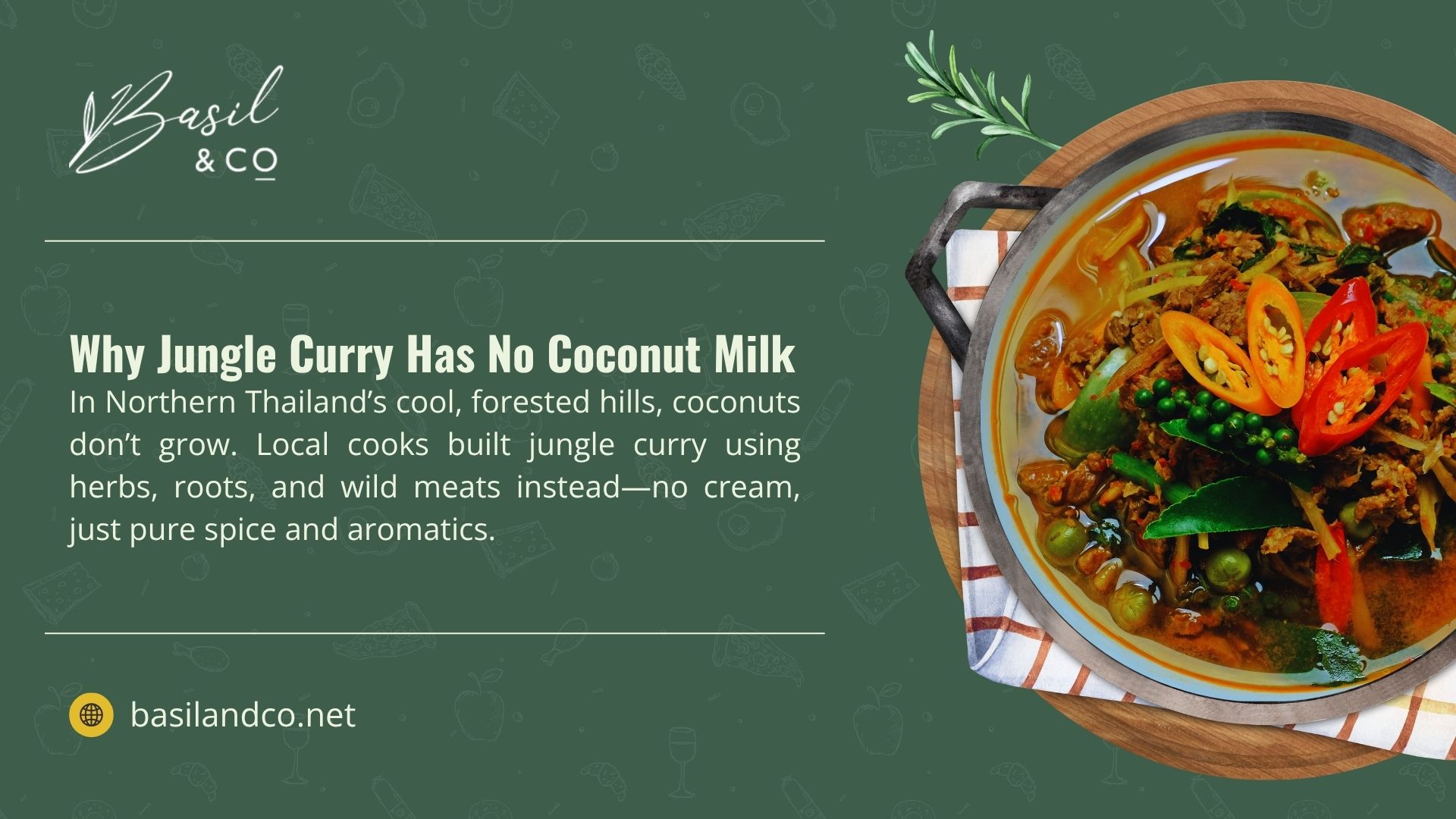
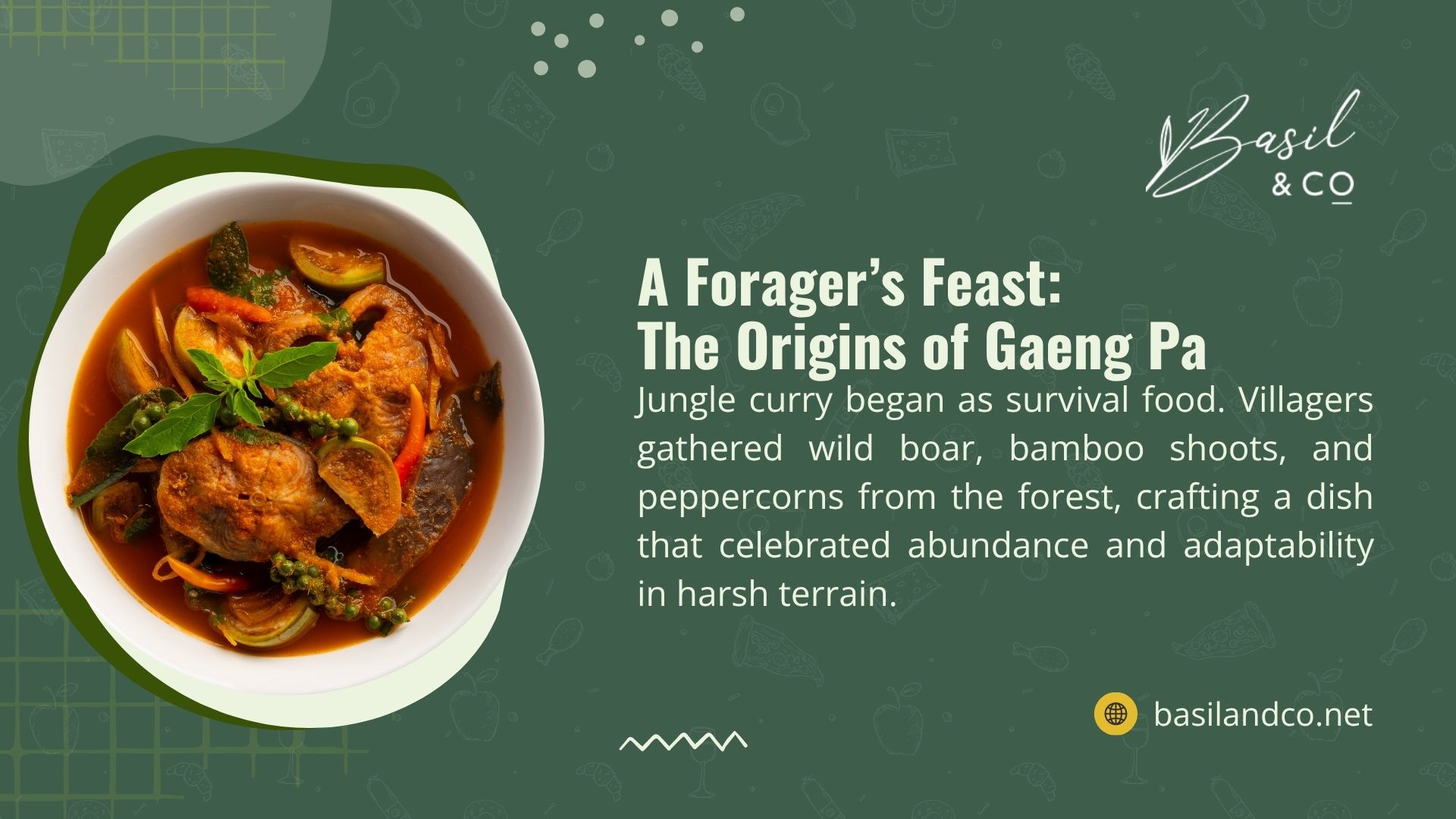
They took whatever they could forage from the forest – wild boar, fresh herbs, peppercorns still on the vine – and threw it all into a pot with some serious chiles. The name Gaeng Pa literally means “forest curry” because traditional versions pack in more than 15 different plants and herbs from the jungle.
What you end up with tastes nothing like the curries most people know. Every flavor is sharp and distinct. The lemongrass hits you first, then the lime leaves, then this wave of heat that keeps building. It’s lighter than coconut-based curries but somehow more aggressive.
This Jungle Curry Recipe Doesn’t Play by Normal Curry Rules
Without coconut milk, there’s nowhere for the spices to hide. Compare it to something like Thai green curry paste or red curry where everything mellows into this unified sauce. Jungle curry stays angular.
The broth looks almost like soup – you can see straight through it. Vegetables keep their shape and texture instead of disappearing into cream. And that classic Thai balance of sweet, salty, sour, and spicy comes through in distinct waves instead of all blending together.
Fresh ingredients matter more here than in almost any other Thai dish. Fingerroot is essential. Fresh green peppercorns give little pops of floral heat when you bite down. Kaffir lime leaves add this perfume-y citrus thing. Holy basil comes in last and brings a peppery kick that regular basil can’t touch.
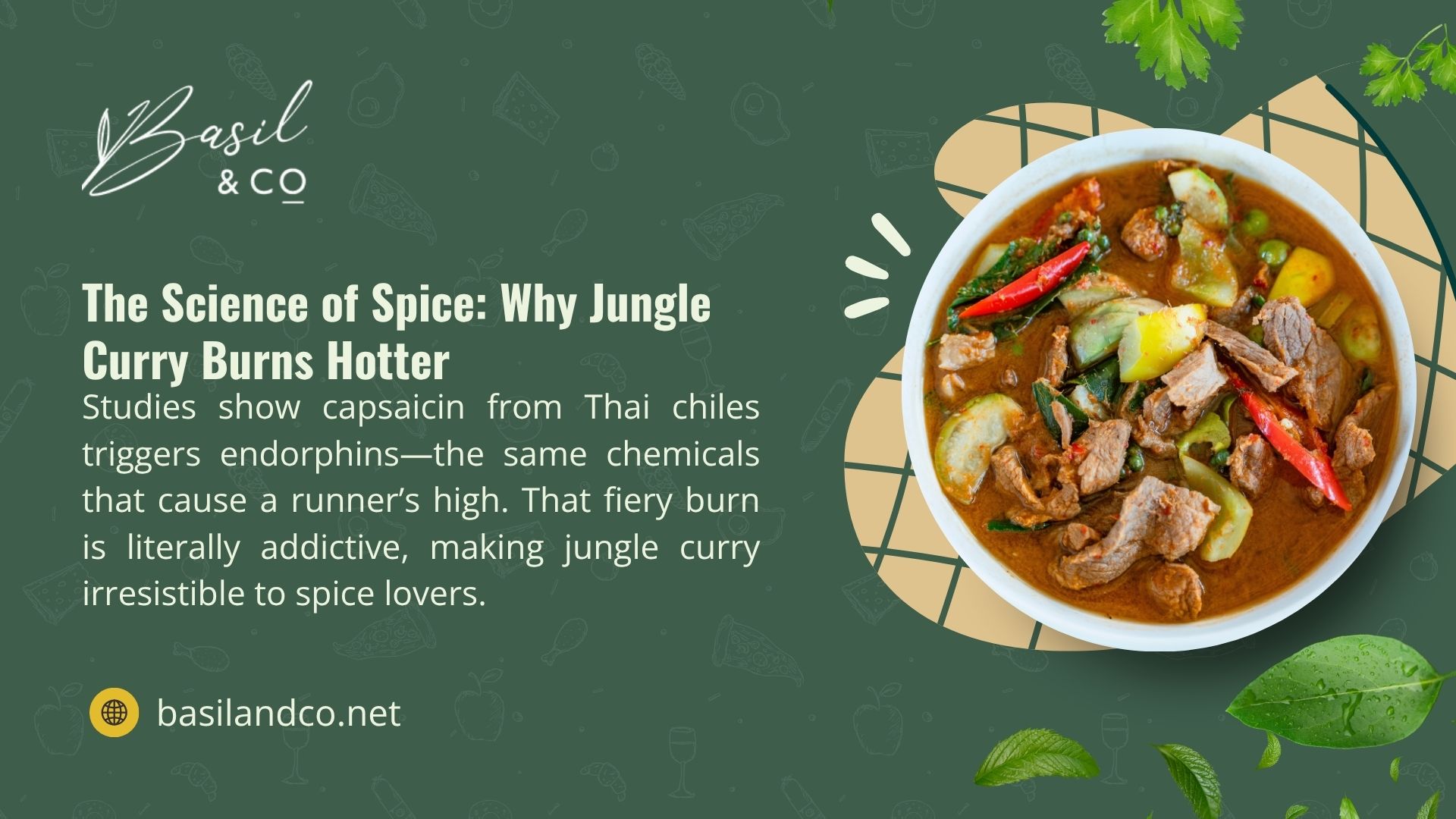
The spice level is crazy. Most Thai curries give you an escape route with all that coconut cream. This one doesn’t. The chiles just keep stacking up bite after bite.
What Goes Into this Jungle Curry Recipe?
The Paste
Making curry paste from scratch with a mortar and pestle is satisfying if you’ve got an afternoon to kill. For everyone else, decent Thai red curry paste from an Asian market does the job.
Protein Options
Chicken thighs are standard because they stay moist and soak up flavor fast. The traditional version used wild boar, which good luck sourcing unless you know a hunter.
Modern versions use:
- Pork shoulder or belly (fatty pork works way better than lean)
- Duck breast (richer, more intense)
- Shrimp or white fish (add these at the very end or they turn rubbery)
- Pressed tofu for vegetarians
Vegetables
Thai eggplants are small, round, firm, and striped. They’re completely different from the big spongy eggplants. Find an Asian grocery store.
While you’re there, grab:
- Long beans (or substitute green beans if you have to)
- Baby corn
- Thai pea eggplants if they have them
- Bamboo shoots
- A handful of fresh red chilies
The Herbs That Make It Taste Right
Without these, it’s just a spicy vegetable soup:
- Fingerroot – looks like tiny ginger fingers, tastes herbal and slightly medicinal. You really need this one
- Fresh green peppercorns on the stem – completely different flavor from dried peppercorns. Floral and bright
- Kaffir lime leaves – citrusy and aromatic. Tear them up before adding
- Holy basil – peppery and intense. Not the same as Thai basil or Italian basil
- Galangal and lemongrass if making paste from scratch
Seasonings
| Ingredient | What It Does | Amount |
| Fish sauce | Salty umami base | 2-3 tablespoons |
| Palm sugar | Balances heat | 1-2 teaspoons |
| Stock | Liquid base | 2-3 cups |
| Lime juice | Brightness | To taste |
How to Cook This Jungle Curry Recipe
Prep Work
Everything cooks fast once you start, so get organized. Cut chicken into chunks – not too small or they’ll dry out. Prep all vegetables to similar sizes. Tear kaffir lime leaves and toss the stems. Slice the fingerroot thin. Line everything up within reach of the stove.
Start With the Paste
Get a wok or large pan screaming hot. Add vegetable oil, then dump in 3-4 tablespoons of red curry paste.
This next part is critical – fry that paste for a solid 1-2 minutes. It should darken, smell incredible, and start releasing oil. People rush this step and then wonder why their curry tastes flat.
The paste might stick a little. That’s fine. Just keep stirring.
Add Protein
Toss chicken into the aromatic paste. Stir everything around so each piece gets coated. Cook for 3-4 minutes until the chicken loses its raw look. It doesn’t need to be cooked through – the broth will finish it.
Build the Broth
Pour stock in slowly while scraping up any stuck bits from the pan bottom. Add fish sauce, palm sugar, and salt. Bring to a simmer, then back off the heat a bit.
Taste it now. Should be pretty intense – the vegetables will dilute it.
Layer Vegetables
Thai eggplants and baby corn go in first since they take longer. Give them 3-4 minutes. Add long beans and green peppercorns. Cook for another 4-5 minutes until vegetables have some give but aren’t mushy.
Kaffir lime leaves and fingerroot go in during the last 2 minutes. These herbs lose their punch if you cook them too long. Kill the heat and stir in sliced chilies and holy basil. The residual heat will wilt the basil without cooking it to death.
Taste and Fix
Thai cooking is all about balance. Taste and adjust:
- Need salt? More fish sauce
- Too aggressive? Add palm sugar
- Lacks brightness? Squeeze lime
- Want more pain? Add chilies
Vegetables should still have bite. Nobody wants baby food texture.
Serving
Jasmine rice is mandatory. The thin, spicy broth needs something to soak into, and plain rice gives your mouth breaks between the heat assault. Cook extra, people will want seconds.
Northern Thailand traditionally serves sticky rice with everything, which also works here.
Some other things that help:
- Cucumber slices (cooling)
- Extra lime wedges (cuts through heat)
- Raw cabbage
- Thai iced tea if you’re dying
Works well with other Thai dishes too. Make some Pad Thai or Tom Yum for people who can’t handle the spice.
You are reading jungle curry recipe also you can read: The Best Authentic Pad Thai Recipe
Swapping Ingredients
Different Proteins
- Pork belly needs 10-15 minutes longer to get tender
- Duck – sear skin side first for crispy texture
- Shrimp – cook for maybe 2 minutes max, add at the very end
- Tofu – press water out, fry until golden first
Different Vegetables
Can’t find Thai eggplants? Use:
- Bell peppers (sweeter)
- Snow peas (good crunch)
- Cauliflower or broccoli (heartier)
- Mushrooms (umami boost)
Mix textures and cooking times. Don’t use all soft vegetables.
Vegetarian Version
Replace fish sauce with soy sauce or tamari. Use vegetable stock. Check curry paste ingredients – some sneak shrimp paste in.
Add umami with soaked dried shiitake mushrooms or miso paste. Check out Thai vegetable dishes for more plant-based options.
Common Screwups
- Rushing the paste: Fry it properly or the whole curry tastes boring. Give it the full time.
- Overcooking vegetables: They should have a crunch. Pull them early because they keep cooking after you turn off heat.
- Wrong consistency: Should be thin and soup-like, not gravy. Add more stock if it gets thick.
- Not tasting as you go: Check seasoning after adding initial fish sauce, then again after vegetables cook. Thai food requires balance.
- Using the wrong basil: Sweet basil or Italian basil won’t work. Holy basil has a peppery, minty thing that’s completely different. Thai basil is an acceptable backup.
Full Recipe
Ingredients
Main:
- 500g chicken thighs, cut into chunks
- 3-4 tablespoons Thai red curry paste
- 2 tablespoons vegetable oil
- 2½ cups stock
- 2-3 tablespoons fish sauce
- 1-2 teaspoons palm sugar
- ½ teaspoon salt
Vegetables:
- 150g Thai eggplants, quartered
- 100g long beans, 2-inch pieces
- 100g baby corn
- 3-4 kaffir lime leaves, torn
- 2-3 tablespoons fresh green peppercorns
- 30g fingerroot, sliced thin
- 3-4 fresh red chilies, sliced
- 1 cup holy basil
- Lime juice optional
Serving:
- Jasmine rice
- Lime wedges
Method
- Get everything prepped and lined up first.
- Heat wok over high heat. Add oil and curry paste. Fry 1-2 minutes until fragrant and darker.
- Add chicken, toss to coat. Cook 3-4 minutes.
- Pour in stock, scraping pan. Add fish sauce, sugar, salt. Simmer.
- Add eggplants and corn. Cook 3-4 minutes. Add beans and peppercorns. Cook 4-5 more minutes.
- Add lime leaves, fingerroot, chilies. Cook 1-2 minutes. Turn off heat, stir in basil.
- Taste and adjust seasoning. Serve over rice with lime wedges.
Skip the Cooking
Making a jungle curry recipe at home is rewarding when you’ve got time and can track down fingerroot and holy basil and fresh peppercorns. Most weeks that’s not realistic.
Basil & Co makes authentic Thai food. Real ingredients, traditional techniques, proper balance of flavors.
Delivery covers Brea, West Covina, Pomona, Chino Hills, Walnut, and Rowland Heights. Check the full menu of the best Thai dishes.Order from Basil & Co and get actual Thai food delivered.

