

Most people order the same three dishes every time. Pad Thai, some kind of stir-fry, maybe Tom Yum soup. They completely ignore yellow curry, which happens to be one of the most approachable Thai dishes out there.
This Thai yellow curry recipe won’t scare anyone away with heat. It’s mild enough for kids but complex enough to satisfy adults who know Thai food. Unlike green curry, which can melt your face or red curry with its serious kick, yellow curry plays nice while still delivering those layered Thai flavors.
The depth of flavor comes from balancing fresh aromatics with dried spices. Something Thai cooks have figured out better than almost anyone else.
Why Most Yellow Curry Fails
Thai cooks know something that gets lost in most Thai yellow curry recipe instructions. They “break” the curry paste by cooking it in coconut cream until the oils separate. Skip this, and your curry tastes flat. Do it right and the paste becomes concentrated and aromatic – completely different from just stirring paste into coconut milk.
Most recipes gloss over this technique or mention it briefly without explaining why it matters. It matters because this is what creates the foundation that everything else builds on.
Shopping Smart
| What You Actually Need | Brand Recommendations | Why It Matters |
| Yellow curry paste | Mae Ploy works best | Cheap paste doesn’t work as well |
| Coconut milk | Any full-fat canned brand | Light versions don’t work |
| Chicken thighs | Bone-in preferred | Breasts get tough and dry |
| Potatoes | Waxy varieties | Russets fall apart |
| Fish sauce | Red Boat or Squid brand | Cheap stuff doesn’t taste as good |
Don’t substitute ingredients just because you have them. Good curry requires the right components.
The Thai Yellow Curry Recipe
What Goes In
The Main Event:
- 4-5 tablespoons yellow curry paste
- 1 can coconut milk (14 oz, full fat only)
- 2 pounds chicken thighs, chopped chunky
- 3 potatoes, cubed but not tiny
- 2 carrots, cut thick on the diagonal
- 1 onion, wedged
- 10-12 cherry tomatoes
The Flavor Makers:
- 3 tablespoons fish sauce (start with 2, add more)
- 2 tablespoons palm sugar (brown sugar works)
- 1 tablespoon tamarind paste
- Water when needed
The Finishing Touches:
- Thai basil (regular basil if that’s all you’ve got)
- Lime wedges
- Sliced chilies for brave souls
- Jasmine rice
How to Make It
- Put a heavy pot on medium heat. Open your coconut milk and scoop out the thick part on top – probably half the can. This goes in the pot first. Let it bubble away.
- Dump in your curry paste and stir like your life depends on it. Keep stirring for 3-4 minutes minimum. The mixture will smell incredible and start looking oily. That oil separation is exactly what you want.
- Pour in the rest of the coconut milk slowly while stirring. Toss in the chicken pieces. Let them cook for about 8 minutes – they don’t need to be fully done yet.
- Potatoes and carrots go in now because they take forever. Season with fish sauce, palm sugar, and tamarind. Add enough water to barely cover everything. Keep it in a gentle bubble for 20 minutes.
- Onions and tomatoes go in during the last 5 minutes. Taste it now. It should be rich, slightly sweet, and well-balanced. Adjust if needed.
- Pile on fresh basil, add chilies if people want heat, and serve with rice and lime wedges on the side.
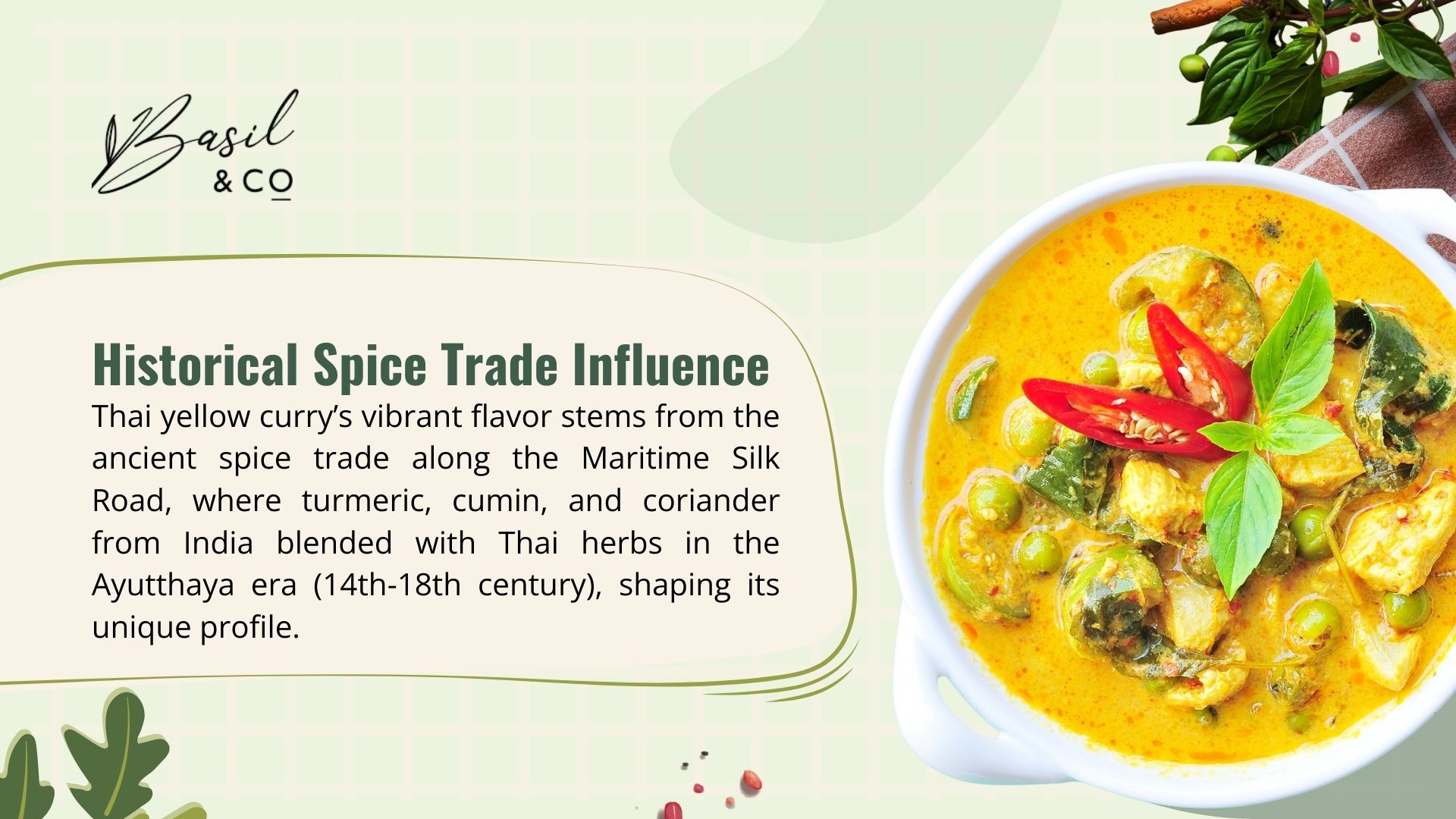
Getting It Right Every Time
That initial cooking of curry paste in coconut cream takes time. Rush it and your curry tastes flat. Take your time and it develops incredible depth. High heat breaks coconut milk. Broken coconut milk looks gross and tastes worse. Keep things at a gentle simmer throughout.
Hard vegetables need more time than soft ones. Chicken takes longer than shrimp. This isn’t complicated but it matters. Thai food balances four flavors: sweet, sour, salty, and spicy. Start light on seasonings and build up. You can always add more, but you can’t take it back.
Making It Your Own
Traditional Thai yellow curry recipe versions include Thai eggplant and bamboo shoots. Those can be hard to find, so modern versions work fine with whatever’s available.
- Protein Swaps: Beef works if you cut it small and cook it longer. Shrimp goes in during the last few minutes. Tofu works for vegetarians, but add extra vegetables to make it substantial.
- Vegetable Options: Green beans, bell peppers, sweet potatoes – all good choices. Zucchini gets mushy, so add it late. Spinach wilts fast, so toss it in at the very end.
People wanting to expand their Thai cooking should try pad thai next or check out other Thai chicken dishes for variety.
Why This is Good For You
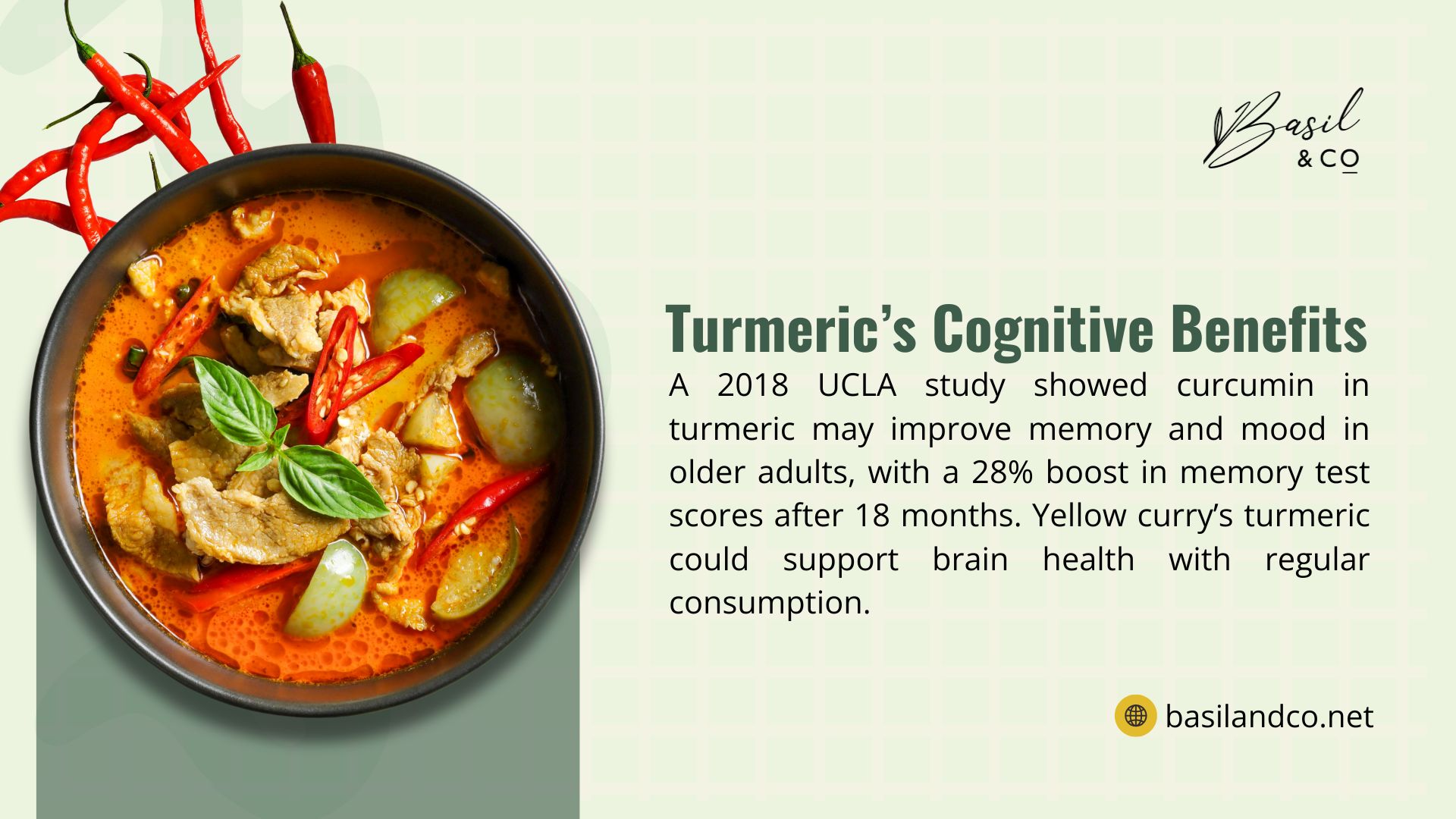
Yellow curry packs nutrition along with flavor. Turmeric contains curcumin, which fights inflammation. Fresh herbs like galangal help with digestion. Coconut milk provides healthy fats that your body actually processes well.
The vegetables add vitamins and fiber. Compared to most restaurant food, it’s relatively clean eating.
Leftovers and Storage
Curry tastes better the next day after flavors have time to meld. Store in the fridge for 4 days or freeze for up to 3 months.
When reheating it, do it slowly and stir gently. Add a splash of coconut milk if it’s gotten too thick. Fresh lime juice brightens up day-old curry.
Regional Differences Worth Knowing
Northern Thailand makes yellow curry with more vegetables and less coconut milk. Southern versions pack more heat and sometimes include pineapple. Restaurant versions outside Thailand usually dial down the spice and amp up the sweetness.
Home cooks can adjust the heat by using more or less curry paste or adding fresh chilies when serving.
Other Thai curries like massaman curry offer different flavor profiles, while making Thai green curry paste from scratch teaches you valuable skills.
What to Serve Alongside
- Rice Choices: Jasmine rice is traditional and the best. Brown rice works if you want extra nutrition. Coconut rice might be overkill with an already rich curry.
- Side Dishes: Thai vegetable dishes round out the meal nicely. Starting with tom yum soup creates a proper Thai dinner experience.
- Drinks: Thai iced tea is classic. Light beers cool the palate. White wines like Riesling complement the spices without fighting them.
When Things Go Wrong
- Curry Too Thin: Simmer longer with the lid off or mix cornstarch with cold water and stir it in.
- Too Thick: Add warm stock or coconut milk gradually until it looks right.
- Tastes Bland: Probably needs more fish sauce for salt or more curry paste for depth. Balance with a bit of sugar if necessary.
- Looks Broken: Heat was too high. Turn it down and stir gently to bring it back together.
Craving Restaurant-Quality Thai Food?
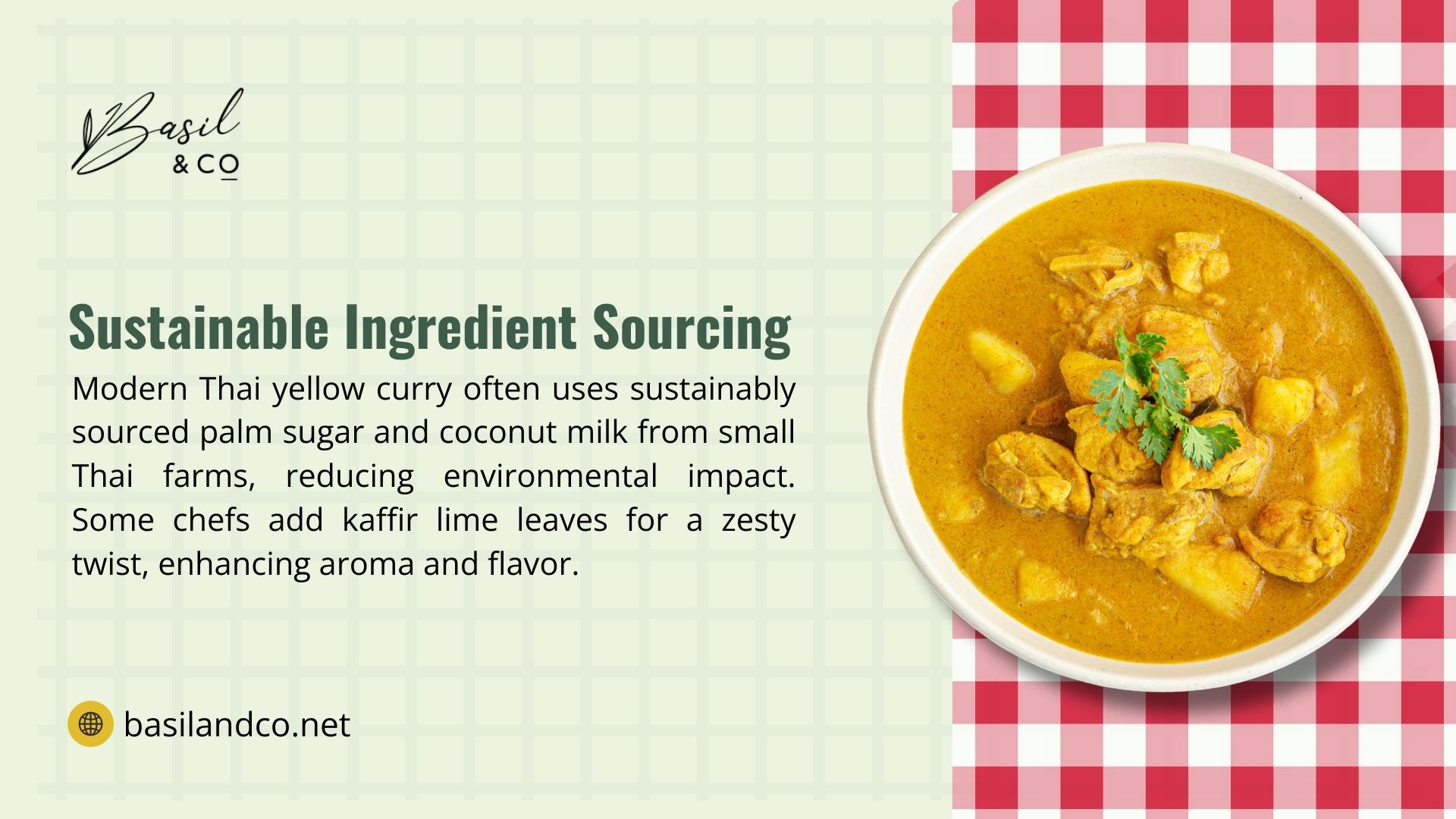
Making this Thai yellow curry recipe at home is satisfying, but sometimes you want authentic Thai flavors without the cooking time. When the craving hits and you need genuine Thai taste, nothing beats professionally prepared dishes made with traditional techniques.Basil & Co delivers authentic Thai cuisine crafted with the same careful attention to flavor balance and traditional methods described in this recipe. Every dish showcases the authentic techniques and traditional methods that create truly exceptional Thai cuisine.

