
Tom Saep, the fiery pork rib soup from Thailand’s Isaan region, stands as one of Southeast Asia’s boldest expressions of balance. Unlike coconut-based Thai curries, this clear, aromatic broth delivers flavor through restraint, mixing lemongrass, galangal, kaffir lime leaves, and lime juice into a sharp yet soothing combination.
Historians trace the tom saep recipe back centuries, when villagers along the Lao border relied on wild herbs to create warmth during the dry season.
Today, tom saep has evolved from a rural staple into a culinary statement: light, spicy, and restorative. Its key ingredients don’t just build flavor, they bring health benefits backed by Thai herbal tradition. Lemongrass aids digestion, galangal reduces inflammation, and chilies boost circulation. The result is a soup that feels cleansing yet indulgent, fiery yet balanced.
This article explores Tom Saep’s origins in Isaan, its flavor architecture, ingredient science, cooking technique, and modern variations you can recreate or taste at Basil & Co in Diamond Bar, California. You’ll learn why Thai chefs call this dish “saep mak”, deeply delicious, and how it captures the soul of Thai cuisine: heat, harmony, and heritage in one bowl.
The Soul of Tom Saep: Where Heat Meets Harmony
To understand why tom saep has such a revered place in Thai cuisine, you have to trace it back to its roots in Isaan, the northeastern region of Thailand bordering Laos. The name itself explains its essence: “Tom” means to boil or soup, while “Saep” is an Isaan-Lao term meaning deliciously spicy or tangy to the point of satisfaction. Together, tom saep literally translates to “boiled to deliciousness.”
A Dish Born from Simplicity and Survival
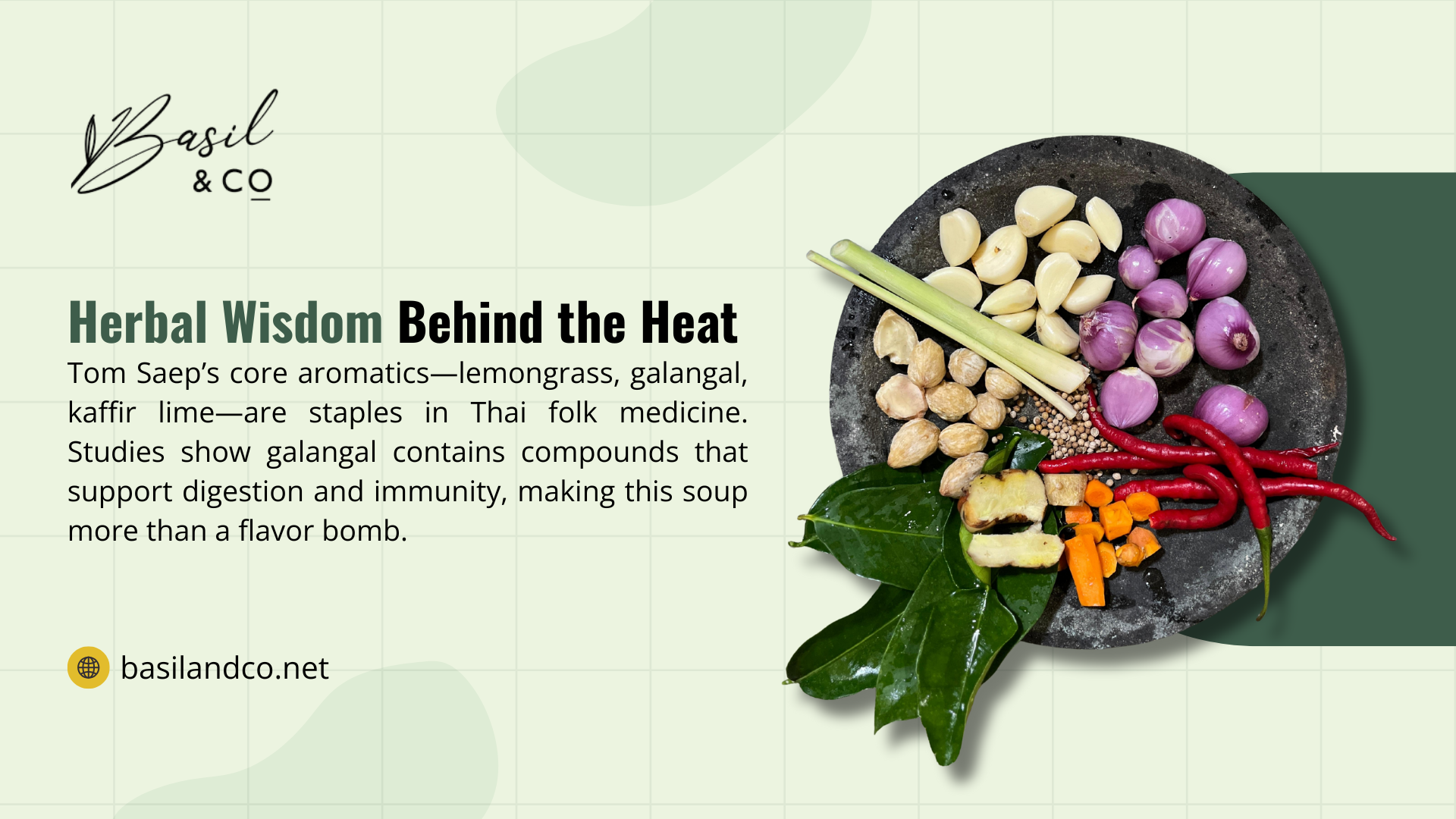
The story of Tom Saep is as humble as its ingredients. Centuries ago, villagers in Isaan lived off the land, often cooking with what they could find around their farms: lemongrass, galangal, kaffir lime leaves, and bird’s-eye chilies. With long dry seasons and limited access to fresh produce, families simmered pork bones and herbs together to create soups that were both nourishing and medicinal.
This cooking style became a signature of Isaan life: bold, resourceful, and deeply aromatic. Unlike the richer southern Thai dishes that rely on coconut milk, tom saep embodies the northeastern preference for clear broths and assertive seasoning. It’s an art of balance, light in body but heavy in flavor, a contrast that mirrors the dual nature of the Thai countryside itself.
The Philosophy Behind the Flavor
At its heart, Tom Saep captures the Thai culinary ideal of balance in extremes. It’s a conversation between sour lime, salty fish sauce, and sharp chili heat, all grounded by the natural sweetness of simmered ribs. The flavor isn’t accidental; it’s deliberate craftsmanship. Every Thai cook learns the rhythm of “taste and adjust,” fine-tuning the broth until no single note overpowers another.
This delicate harmony is what gives the soup its reputation. Locals often describe the perfect bowl as “saep mak”, a phrase that means “profoundly delicious.” The term doesn’t just describe taste; it reflects emotion, warmth, and the communal spirit of eating together.

A Soup with Real Benefits
What makes Tom Saep truly remarkable is how taste meets wellness. The dish was designed not just to feed, but to heal.
- Lemongrass and galangal help calm the stomach, aiding digestion after large meals.
- Kaffir lime leaves and lime juice cleanse the palate and deliver vitamin C, strengthening immunity.
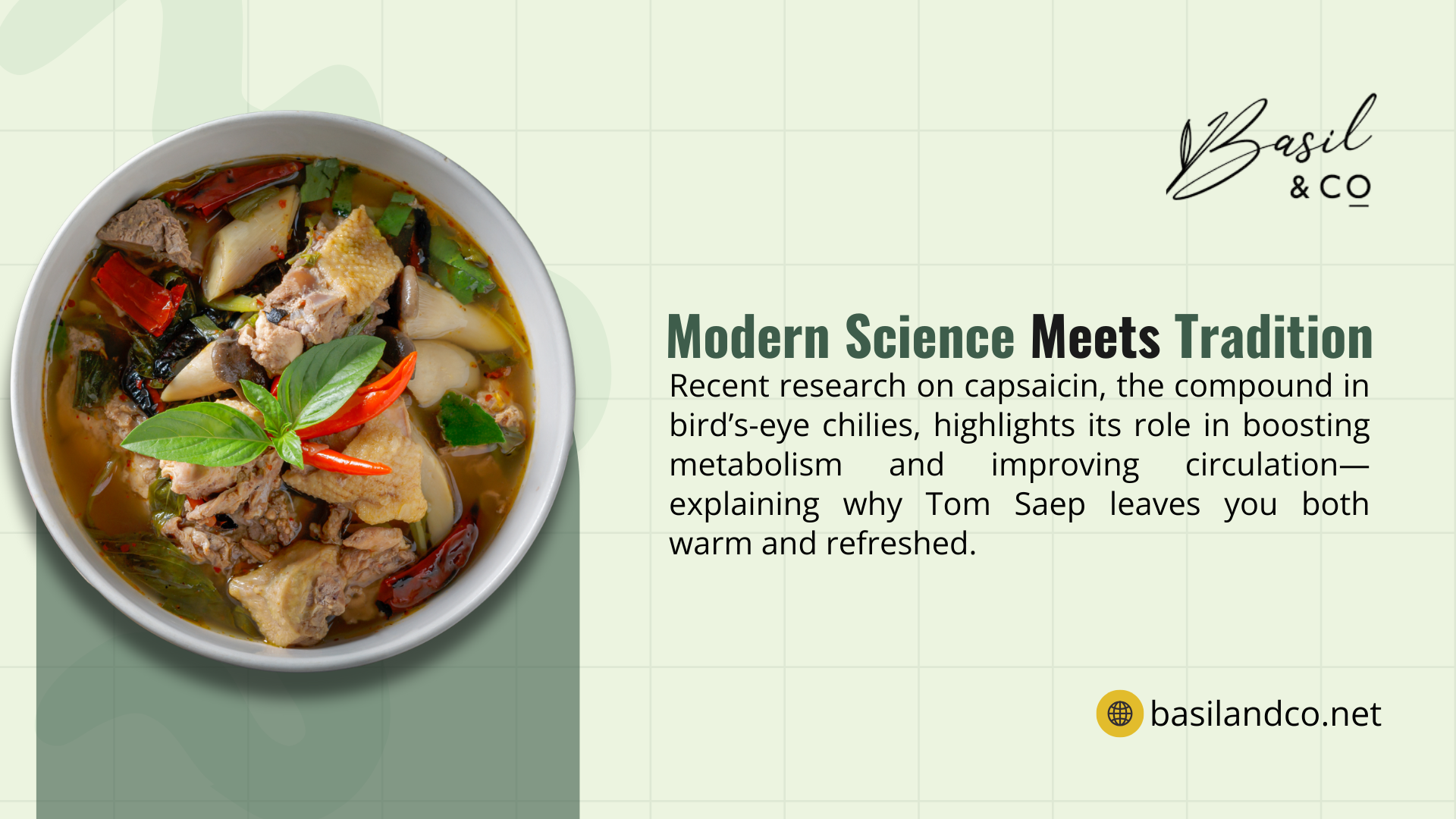
- Chilies promote better blood flow and clear the sinuses.
- Pork ribs or beef bones enrich the broth with collagen and minerals that nourish joints and skin.
It’s the kind of meal that revives after a long day in the fields, a natural detox disguised as comfort food. That’s why Thai families often prepare tom saep after feasts, during cold months, or when someone in the house feels under the weather.
From Isaan Fields to Modern Tables
Over time, Tom saep made its way from wooden village kitchens to Bangkok’s street markets, and now to restaurants around the world. Each version tells its own story: some keep the broth fiercely spicy, others mellow it for broader palates. Yet the essence never changes, clarity, aroma, and heat held in perfect tension.
At Basil & Co., we honor that heritage. Our chefs still use the traditional aromatics that gave this soup life in Isaan centuries ago. Whether served beside fragrant jasmine rice or enjoyed as a stand-alone meal, it remains a bowl that burns, soothes, and heals all at once, the truest embodiment of Thailand’s culinary soul.
The philosophy behind the soup, clarity, balance, and restraint, mirrors Thailand’s broader culinary wisdom: real power doesn’t come from excess, but from precision. Dishes like our Thai green curry paste recipe or sour orange curry recipe echo that same belief.
At Basil & Co., Tom Saep remains one of the purest reflections of that tradition, a bowl that burns, cleanses, and revives, all at once.
Key Ingredients and Why They Matter
Before cooking, understand the function of each ingredient. Each plays a role—some deepen aroma, some sharpen taste, and others hold the soup together. Skipping even one change changes the balance.
| Ingredient | Role in the Dish | Why It Matters |
| Pork ribs | Foundation of the broth | The collagen and marrow create a natural body and savoriness without added fat. |
| Lemongrass | Fragrance and freshness | Adds citrus lift that counters the heaviness of meat. |
| Galangal | Earthy spice | Distinct from ginger, it provides sharpness and medicinal warmth. |
| Kaffir lime leaves | Aromatic top note | Contributes the recognizable floral citrus scent of Thai soups. |
| Fish sauce | Salty umami | Deepens body and adds a savory layer essential to Thai cooking. |
| Lime juice | Sour brightness | Brings acidity that defines Tom Saep’s identity. |
| Chili | Heat and intensity | Balances lime’s sourness; adjustable to preference. |
| Roasted rice powder (optional) | Texture and nuttiness | Traditional in Isaan; thickens slightly and enhances mouthfeel. |
Most cooks emphasize “taste and adjust” only after simmering, because flavors evolve as the broth reduces. Over-seasoning early can ruin that fragile balance. If you’re learning the flavor mechanics of Thai soups, check out our sour orange curry recipe for another example of sour-forward Thai cuisine.
Step-by-Step Method: Crafting the Perfect Tom Saep
The process is straightforward yet delicate. Each stage builds complexity.
Step 1: Prepare the Base
Cut ribs into manageable chunks, rinse them, and blanch briefly to remove impurities. Transfer them to a pot with six cups of water and bring to a boil. Skim any foam; this ensures the broth stays clear.
| Key Detail | Explanation |
| Water ratio | 6 cups per ½ kg of ribs yields balanced concentration. |
| Boil & skim | Removes bone residue for a clean flavor. |
Step 2: Add Aromatics
Once clean, add bruised lemongrass stalks, sliced galangal, shallots, and garlic. Reduce the heat and let it simmer for about 45–60 minutes.
| Key Detail | Explanation |
| Simmer time | Allows ribs to soften and release collagen. |
| Aromatic layering | Early infusion helps build a base fragrance. |
Step 3: Infuse with Leaves & Heat
Ten minutes before finishing, add kaffir lime leaves, mushrooms, and fresh bird’s-eye chilies.
| Key Detail | Explanation |
| Lime leaves timing | Late addition keeps aroma bright. |
| Chili control | Add one sliced chili at a time, testing heat. |
Step 4: Balance the Broth
Turn off the heat before seasoning. Add fish sauce, sugar, and fresh lime juice. Stir, rest for two minutes, then taste. Adjust slowly until the sour-salty-spicy trio hits harmony.
| Key Detail | Explanation |
| “Taste and adjust” | Core Thai technique—flavors sharpen after rest. |
| Ratio tip | 2 tsp fish sauce: 1 tbsp lime juice: ½ tsp sugar works for fthe irst try. |
Step 5: Serve and Garnish
Ladle into bowls, add cilantro and scallions, and offer extra lime wedges. Serve with steamed jasmine rice or sticky rice to mellow the spice. You can see similar plating styles in our Thai chicken dishes, where presentation complements aroma.
Variation Options and Why They Work
Tom saep adapts easily while keeping its core DNA intact. Here’s how each variant changes the chemistry, and why it works.
| Variation | Key Adjustments | Why It Works |
| Beef Tom Saep (Tom Saep Neua) | Replace pork ribs with beef short ribs or flank; shorten simmer to 40 minutes. | Beef adds deeper, darker umami; collagen thickens broth faster. |
| Mushroom & Vegetable Tom Saep | Use mushroom stock; swap fish sauce for soy + salt. | Mushrooms mimic meat savoriness; ideal for vegetarian diners. |
| Extra-Hot Isaan-Style | Double chili count; add toasted rice powder at the finish. | Traditional Isaan twist adds texture and smoky nuttiness. |
| Milder City-Style | Reduce chili; increase lime and sugar ratio slightly. | Balances for urban palates, softer entry for newcomers. |
These adaptations prove Tom Saep’s versatility. Whether you enjoy it fiery like the villagers of Khon Kaen or mild enough for a downtown lunch, the base principles remain constant. Similar balance plays out in curries such as our massaman curry recipe or panang curry recipe, which rely on controlled contrast rather than brute spice.
Key Takeaways
| Element | Insight |
| Origin | Isaan, northeast Thailand, is influenced by Lao culinary traditions |
| Defining traits | Clear, sour, spicy broth centered on ribs or meat |
| Signature aromatics | Lemongrass, galangal, kaffir lime leaves |
| Technique | “Taste and adjust” ensures balance rather than fixed ratios |
| Variability | Adapts to beef, mushrooms, or spice levels easily |
| Experience | Light yet fiery, comforting yet invigorating |
A Final Word: The Spirit of Thai Heat
A bowl of tom saep isn’t about perfection; it’s about balance achieved through intuition. Every ingredient must earn its place, every spoonful should feel alive. It’s the kind of dish that wakes you up, clears your sinuses, and somehow comforts you at the same time.
At Basil & Co., we serve tom saep as it was meant to be, clear, aromatic, and unapologetically bold. You can experience it fresh in our restaurant or have it brought straight to your table through our delivery service. For larger gatherings, explore our catering in Diamond Bar page to bring authentic Thai flavor to your event.
Thai cuisine celebrates contrast, and the tom saep recipe captures that truth better than any dish. Taste it once, and you’ll understand why this fiery soup from Isaan continues to define Thailand’s culinary edge centuries later.

